With the evolution of artificial intelligencel, chatbots are no longer just tools automated response and began to play a more important role human in the digital interactions. The new generation of bots not only understands words, but also recognizes emotions. In this article, we will explore the concept of chatbots with iemotional intelligence, its practical applications and how its enterprise can benefit from this technology.
THE artificial intelligence from the Matrix Go already incorporates this new generation of technologies empathetic. Our systems are able to listen, interpret and respond with emotional intelligence real, offering interactions that go beyond the automation. They welcome, understand and build trust. That's it IA that transforms each service in an experience human, efficient and memorable.
What are emotion-sensitive chatbots?
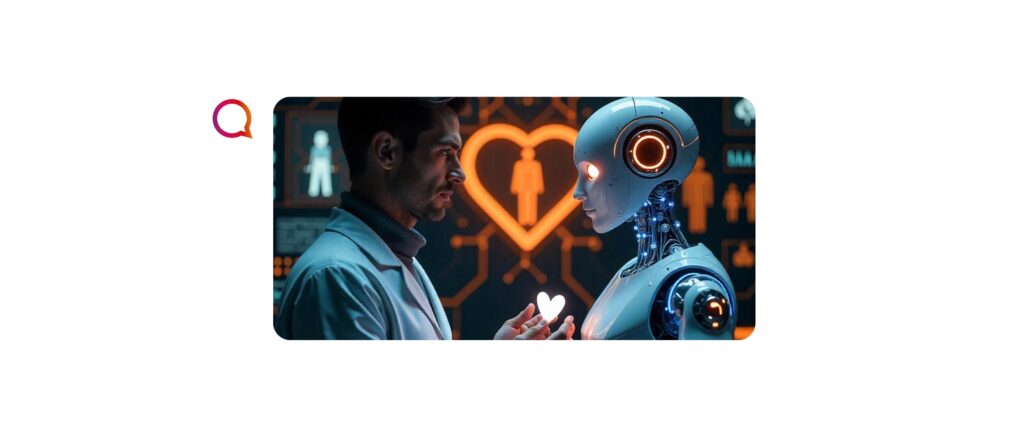
Chatbots with emotional intelligence are systems of IA designed to detect and react empathetically to human emotions. They use technologies as Natural Language Processing (NLP), analysis of feelings and Generative AI to interpret the tone, the context and even pauses in communication.
The main difference between these bots and the traditional is in the form of interaction. While the chatbots conventional follow rigid flows response, empaths are able to adjust their messages according to the emotional statel of the user, making the conversation more fluid and welcoming.
This is possible thanks to the combination of language models, analysis algorithms feelings and databases trained to recognize emotional patterns in different types of input: text, voice and even facial expressions in certain contexts.
READ ALSO: Automated + Humanized Service: Understand the evolution of digital employees
Companies that already apply this concept
The use of chatbots emotionally intelligent is already a reality in several companies around the world:
- Woebot Health: one virtual assistant focused on mental health, designed to talk to users and help them deal with emotions. He uses IA to detect signs of anxiety, sadness or stress and respond with empathy.
- KLM Royal Dutch Airlines: The airline uses AI to adjust the tone of the communication with the client, adapting the language according to the mood detected in the messages, especially in contexts of complaint or support.
READ ALSO: Best Practices for Using WhatsApp Business API – MatrixGo
Why this matters for your business
Adopt a chatbot with emotional intelligence can completely transform the way your company communicates with customers, especially in sensitive situations such as technical support, financial problems or health care.
Companies that apply this type of technology can:
- Increase the satisfaction and retention of customers;
- Improve KPIs such as CSAT (Customer Satisfaction Score) and NPS (Net Promoter Score);
- Avoid responses automatic and cold, which often worsen the experience of the user.
Furthermore, by demonstrating empathy, your company reinforces values such as care, active listening and respect for customer, contributing to the construction of a reputation solid in the market.
READ ALSO: OpenAI Operator with o3 Model: What Changes for the Future of Autonomous AI – MatrixGo
Limits and ethical concerns
Despite the advantages, it is essential to be aware of the challenges ethical and technical of this technology:
- Risks of misinterpretation: an error in emotional identification can aggravate delicate situations;
- Privacy and security: sensitive data, especially in health contexts, must strictly follow standards such as LGPD and GDPR;
These precautions are essential to ensure trust and security in AI-mediated digital interactions.
READ ALSO: How to Predict Churn with AI and Keep Your Customer Base Engaged – MatrixGo
The Future of Digital Empathy: What's Next
The advancement of emotional artificial intelligencetip for increasingly natural interactions between humans and machines. We are close to a new generation of emotional voicebots, capable of detecting hesitations, intonations and pauses, increasing the level of understanding of the context.
In the Matrix Go, we already apply this reality: our virtual assistants are developed to listen with empathy, interpret emotions in real time and respond in a manner humanized. More than technology, we deliver connections true between companies and customers.
Furthermore, with the evolution of Generative AI, it will be possible to build virtual agents that “mirror” human emotions more accurately, dynamically adjusting to customer behavior. This connects directly with the concept of humanized autonomous assistants, like Morpheus, which already operate with autonomy, intelligence and empathy.
If you want to offer a better service intelligent, welcoming and efficient, discover the solutions from Matrix Go. Ours chatbots, voicebots and the virtual agent Morpheus are developed with a focus on empathy, automation and results.
Speak now to one of our consultants on 0800 604 555.