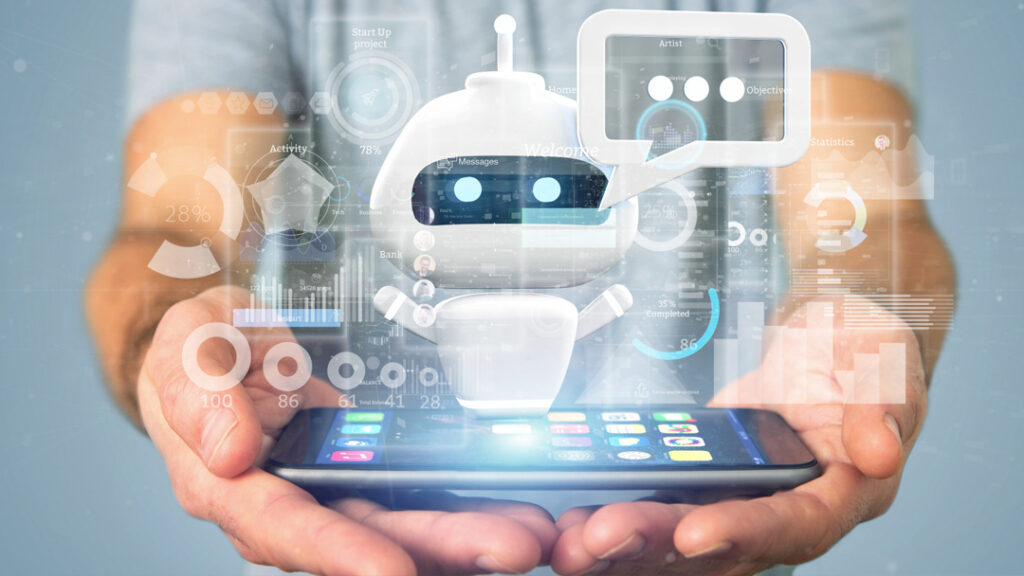
Talking about automation and artificial intelligence naturally leads us to talk about... Chatbots and Virtual AssistantsAlthough many people consider them synonyms, each of these terms has its own distinct meaning. specific characteristics that differentiate themWhile Virtual Assistants, controlled by voice or text, respond according to patterns and the availability of the most relevant information (with Siri, Alexa, or Cortana being the most prominent examples); Chatbots are robots (bots) that interact via chat. Primarily in messaging apps like WhatsApp, Facebook Messenger, or Instagram Direct. In general, these don't have a human appearance, being characterized only as software. Differences aside, various interpretations and categorical truths about these bots commonly arise. Let's demystify them then. Here are 6 myths about chatbots.!
1: "Chatbots aren't that smart"
Of the six myths about chatbots, this is perhaps the most false of all! In this paradox between man and machine, we tend to subjugate them as a way of protecting ourselvesIt's simply more comfortable to ensure our supremacy.
But without going into that, yes, older and outdated bots could only be capable of conducting a limited number of conversations, through permanent encoding and exact matching of words and phrases. All of that has changed drastically! Currently, powerful chatbots are equipped with robust processing to understand the meaning of an interaction..
These bots, based on PLN (Natural Language Processing) are highly flexible and work on continuous learning.In other words, with each new interaction, they learn and develop themselves, so that the next interaction will always be superior.
2: "Chatbots don't remember previous interactions"
To say that chatbots have no memory is to laugh at the technical capabilities of these machines.Perhaps this was true a few years ago, but with the use and evolution of Artificial Intelligence, the Bots have been collecting information and storing it in order to use it strategically. (within the rules of the LGPD, of course).
Here's an example: you accessed an online store and spent many minutes on a particular product page. You didn't buy anything; it was out of stock. On a subsequent visit, the customer service chatbot identifies you and, using your browsing history, verifies that the product you showed interest in is available. Bingo! Proactive contact from the chatbot with a personalized message."Hi Leandro! We have great news for you. The soccer jersey you might be interested in is back in stock. Secure yours as soon as possible."
3: "Chatbots can perform few functions"
Comparatively, in the past, chatbots only performed specific and mechanical tasks, such as password changes, sending codes and technical information, and automated processing. That's no longer the case today! NLP and the concept of Machine Learning (Machine learning, in a literal translation) expanded the functionalities of bots.
Much more diverse, they are now They perform different functions because they seek to understand the user's intent.So don't be surprised the next time a chatbot provides you with detailed technical assistance on how a product works or shows you details of your invoice.
4: "Chatbots don't identify feelings"
We said that PLN and the Machine Learning They have expanded the ability of chatbots to identify intentions and meanings behind words. But what about feelings?
More modern chatbots are also able to identify some degree of sentiment in interactions, expanding and personalizing responses to be more empathetic or sensitive.For example, it is already common for these machines to identify if the user is nervous or irritated, so they can respond in a way that reassures them and does not exacerbate the stress.
Identifying some ironic and even offensive remarks.These tactics are already common in many chatbots. Think twice before you try to flirt with or curse at that customer service robot, okay?!
5: "Maintaining consistency between chatbots is difficult"
Of the 6 myths about chatbots, here's another one that's hard to swallow! If there's one thing these machines are good at, it's reproduction: they can reproduce interactions with the same quality (if not superior) to the previous one.Comparatively, their physical attendants are impacted by external issues beyond their control: while attendant A, on a good day, provides excellent service; attendant B has very low performance because she argued with her boyfriend, for example.
Consistency is even greater when bot support across different channels is integrated into a single omnichannel platform.Voilà: centralized and shared customer service, responses, and information between in-person staff and intelligent robots. Everything becomes easier and faster.The platform OMINI, from the Matrix Brazil, is one of major unified communication centers in the market.
6: "Bots don't need humans"
I created my chatbots, put them into operation, and that's it: I leave them there, doing their magic. Anyone who thinks these robots don't need human assistance is mistaken.However modern and intelligent they may be, yes, they still cannot compete with the human brain and the specificities of human communication.
It's not that they require constant monitoring.But human control is interesting in resolution of some different patterns and senses that the machine may be processingCombining machine learning with human monitoring is ideal for efficient and effective customer service.
With the increasingly widespread and popular use of chatbots, It is natural that we will witness new revolutions and advancements in the interaction of these robots in the coming years.Constantly evolving, bots promise to continue surprising and assisting us even more. Far from representing a threat to jobs, they definitely need to be... understood as software of great value for business customer service operations.