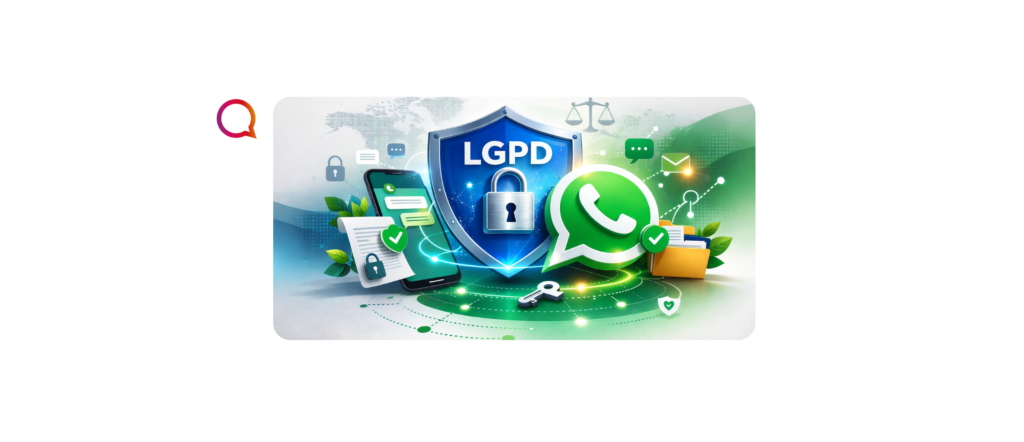

A report on the evolution ofThe rules on data privacy in digital media were released by Meta, the company that controls Facebook, Instagram and WhatsApp, on the evolution of data privacy rules in recent years.
The Meta study, carried out in conjunction with the Deloitte, called “A Marketer's Guide to Privacy-Enhancing Technologies,” details key demands and trends related to user protection. The document, titled “Privacy Matters: How We're Building a More Private Future,” presents the company's main initiatives to protect users' personal data and comply with current laws and regulations in different countries.
According to the report, Meta has invested in technologies and tools that allow users to have more control over their data, such as end-to-end encryption, incognito mode, the off-Facebook activity manager, and the privacy center. Additionally, the company states that it has collaborated with authorities, civil society organizations, and privacy experts to develop global and consistent standards on the topic.
The report also highlights the challenges and opportunities facing the Metaverse in the current landscape, such as the transition to a metaverse-based internet, the expansion of artificial intelligence, and the rise of cyber threats. The company says it is committed to building a more private and secure future for its users, respecting human rights and democratic values.
SEE ALSO: “Using the Facebook and WhatsApp Catalog with OMINI”
SEE ALSO: “Digital transformation in business: impacts and opportunities with messaging channels”
Privacy-Enhancing Technologies: The New Allies of Data Privacy
Data privacy is a fundamental right of citizens and a legal requirement for companies that collect, store, and process personal information. However, Meta wants to ensure data protection in an increasingly connected and digitalized world. This is a complex and dynamic challenge that requires innovative and effective solutions.
In this context, Privacy-Enhancing Technologies (PETs) emerge, which are tools that aim to increase the level of data privacy, reducing the risks of leakage, misuse or unauthorized access. PETs can be classified into three main categories: data minimization technologies, data protection technologies, and user empowerment technologies.
Data minimization technologies are those that seek to reduce the amount and sensitivity of data collected, stored and processed, following the principle of data minimization.. Some examples are anonymization, pseudonymization, aggregation, generalization, and data deletion.
Data protection technologies are those that seek to guarantee the security and integrity of data, following the principle of confidentiality. Some examples are encryption, authentication, authorization, access control, and auditing.
Empowerment technologies of users are those that seek to give users more control and transparency over their data, following the principle of accountability. Some examples are informed consent, the right to access, rectify, delete and portability of data, preference management and complaints mechanism.
PETs can be applied in various domains and sectors, such as health, education, finance, e-commerce, social networks, the Internet of Things, and artificial intelligence. They can bring benefits to both users and businesses, such as increased trust, loyalty, competitiveness, compliance, and innovation.
PETs are, therefore, the new allies of data privacy, which can contribute to more ethical, sustainable and humane technological development.
Marketing Strategy
To create a secure data handling environment, it's not enough to have a superficial knowledge of available technologies and resources: it's necessary to have a deeper understanding of the relevance of the topic, and this can only be achieved through educational campaigns within organizations.
Marketing professionals play a crucial role in this process: disseminating and communicating data security and privacy policies, requirements, and best practices internally.
Here we highlight the guide's recommendations for preparing for this scenario.
Invest in data privacy education
Understanding what PETs are and their importance is the first step in creating a secure data environment. Everyone within a company (from interns to management) should understand data privacy strategies and their relationship to brand positioning.
Understand where your business is today
Here comes a fundamental question: “Is your company aware of the changes in data privacy rules? ”. Furthermore, knowing what data the organization uses, how it is collected and protected will determine the next steps in confidentiality strategies.
Make your data strategy as collaborative as your business
Building and implementing a data privacy strategy shouldn't be the sole responsibility of the teams most impacted by it, such as Marketing and Product.. Having synergy between these groups and those in IT and Legal, for example, will make privacy actions more effective.
Enhance your data privacy and consent capabilities
Ensuring data privacy goes far beyond a consent text on web page forms. Data governance, privacy policies, and investment in technology are the resources needed to build a reliable system for collecting and handling information in the digital environment..
Partner and experiment
Building a data protection architecture using PETs requires specialized consulting. Testing and experimenting with privacy-enhancing solutions is also recommended.
Additionally, benchmarking with other companies can be interesting to understand how they protect your data and that of third parties, adapting what makes sense to your reality.
In a complex context of information handling, The main challenge of digital marketing is reaching new customers and creating increasingly personalized experiences, combined with efficient data governance.
PETs point the way forward, as detailed in the Meta report, but it is necessary to invest in education within companies about the seriousness with which data privacy should be treated within organizations.
The more solutions a company has to optimize data privacy, the lower the chances of dealing with information leak crises.
READ ALSO: “Customer Service Mistakes: How to Avoid Them?”
READ ALSO: “The History of Artificial Intelligence”