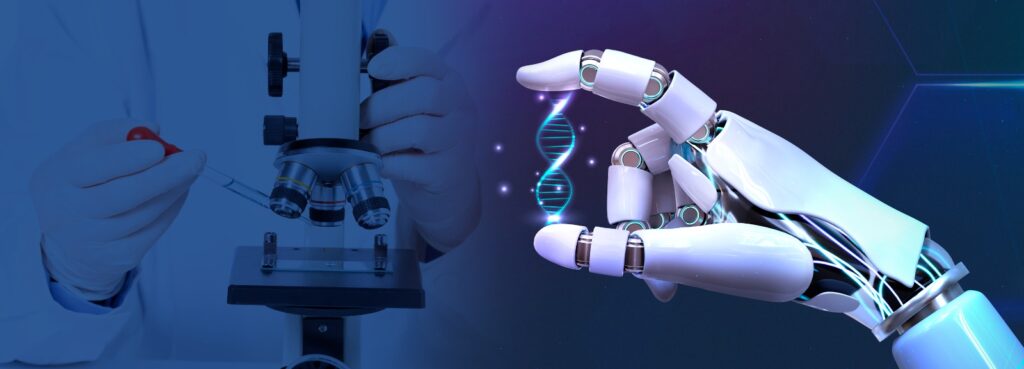
In the field of pharmaceutical research, the discovery and development of new drugs is often a long and costly process. However, the Google has launched two Artificial Intelligence (AI) tools that aim to help pharmaceutical and biotechnology companies accelerate drug discovery.
The initiative also aims to promote the advancement of precision medicine, which involves developing treatment techniques that consider people's genetic characteristics and their responses to diseases.
Companies such as: Big Pharma's Pfizer and biotech companies Cerevel Therapeutics and Colossal Biosciences are already using Google's new tools.
SEE ALSO: “10 Things Google Bard Does Better Than ChatGPT”
SEE ALSO: “Google launches access keys for login”
What are Google's new tools?

Google has designed two new tools which are:
Target and Lead Identification Suite – helps companies predict and understand protein structure, a fundamental part of drug development.
Multiomics Suite – This is a biomedical database that helps researchers input, store, analyze, and share large amounts of genomic data.
The initiative also aims to promote the advancement of precision medicine, which deals with the development of techniques for treatments that consider people's genetic characteristics and their responses to diseases.
New tools mark Google's latest advance in this sort of AI arms race currently underway among tech companies. At the finish line is dominance in a market whose value analysts believe will reach trillions of dollars in the future.
Additionally, the two new Google Cloud packages help solve a long-standing problem in the biopharmaceutical industry: the time-consuming and costly process of bringing a new drug to the U.S. market.
Google and AI
The tech giant has faced pressure to showcase its generative AI technology since the public launch of ChatGPT, OpenAI, at the end of 2022.
To compete with the ChatGPT, Google launched the Chatbot Bard, a tool that uses an AI system to write texts and solve problems based on user commands, from the company OpenAI. The technology was released to 180 countries. Brazil was left off the list. After Google revealed several AI advances, such as in search, email, and maps, at its annual developer conference.