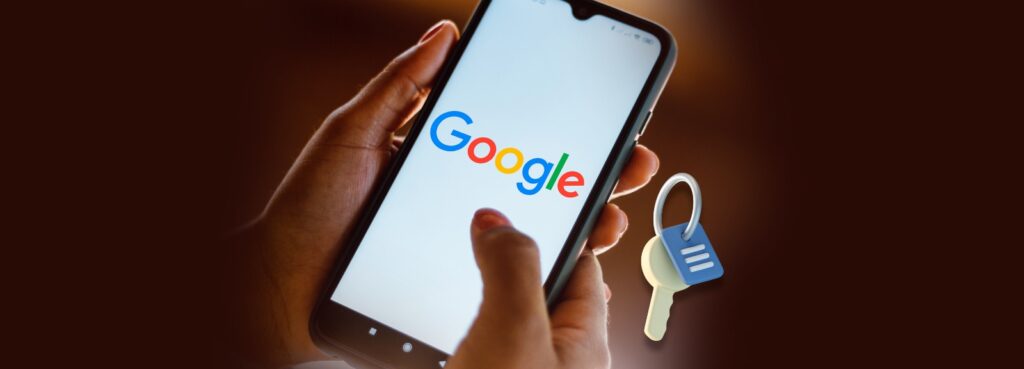
In a statement, the Google announced a new feature that promises to replace passwords. Access keys can replace passwords and two-step verification codes for logging in. In this way, your cell phone will be your new security barrier.
Access keys will protect against phishing attacks, account hijacking through SIM swapping, and other forms of attack. Google has made available the option to "use a passkey from another device," creating a single login for that device. This does not mean that the user's passkey will be transferred to that device.
READ ALSO: "Gmail gets a blue checkmark to combat email fraud"
READ ALSO: “Google designs “new search engine” with AI”
According to the company, the change should make password theft crimes more difficult.
- When a user adds an access key to their Google account, the system will request it when they log in or perform sensitive actions on the account.
- The access key is stored on the local computer or mobile device, which will request your screen lock biometrics or PIN to confirm that it is indeed the person;
- According to Google, biometric data is never shared with Google or any other third party – the screen lock releases the access key stored locally.
The keys will be created in the user's Google account and will not be shared with Google, remaining restricted to the user's devices only. When you log in or perform other actions on your account, you will be asked for the keys. Biometric screen lock or PIN will be requested to confirm that it is the user trying to access the account.
Unlike passwords, passkeys can only exist on devices. By using a passkey to sign in to your Google Account, you prove to Google that you have access to your device and can unlock it.
The use of passwords for authentication in computer systems only began in the 1960s, with the development of the first multi-user computer systems. With the advent of the internet and the exponential growth in the number of users and information online, the importance of passwords has become even greater. Currently, passwords are used to access emails, social networks, bank accounts, and various other online services that store personal and financial information.
SEE ALSO: "Meta uses different human senses to generate content"
SEE ALSO: "Humanized or automated service: which is the best option?"