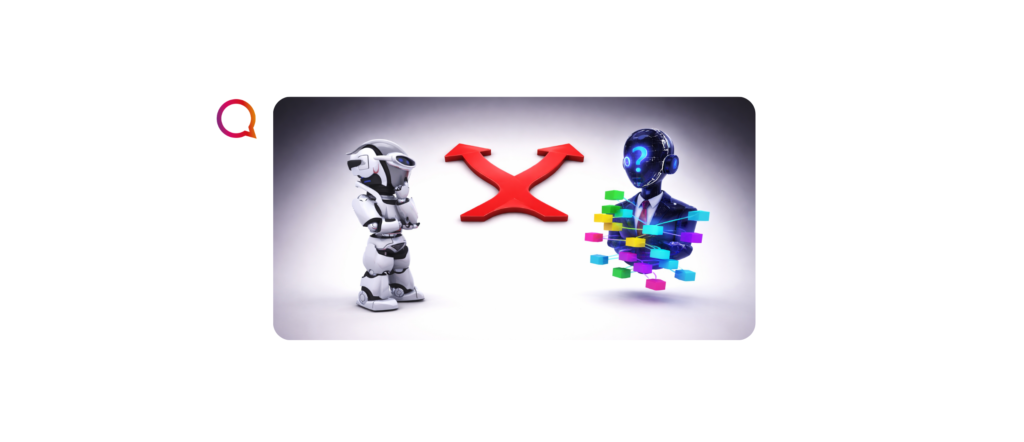
Cold, robust machines take jobs from real people in automotive factories. Evil-looking cyborgs fight against humanity in numerous disaster movie scenes. Citizens of the world have their information and data stolen by machines. The portrayal of automation and artificial intelligence in media and entertainment is frightening and doesn't necessarily reflect reality. Want to learn more about this technology? Understand what Artificial Intelligence is!
Artificial Intelligence
Artificial intelligence, or simply AI, is an area in Computer Science responsible for simulate human intelligence and behavior using only machines. The goal of AI is to perform human activities, from the simplest to the most complex.
Today, for example, artificial intelligence is present in many products and elements of our daily lives: purchase suggestions when we return to a website, facial recognition mechanisms, spam filtering in your email... even self-driving cars, already being tested in some cities.
Machine learning
A key point of Artificial Intelligence is the self-learning capacity of these machines. You may have heard of machine learning?! In Portuguese, machine learning describes a system that gives computers the ability to learn functions for which they were not originally programmed – yes, the machine learns to perform something automatically, based on context, repetitions and updates.
Natural Language Processing
This self-learning gives AI a variety of possibilities. In the field of communication, Artificial Intelligence uses a complex internal system/resource known as NLP – Natural Language Processing, or Natural Language Processing (NLP). This technology helps technological devices understand and interact correctly with human language.
It's important to understand that human language differs from machine programming language. NLP works like a translator, allowing technology to understand users even when they're using their natural language. The better this translation and understanding, the better the user experience when using these technologies.
Application of NLP
THE Matrix OMINI for example relies on Natural Language Processing to understand and interpret intentions and interact with its users.
Not only the Matrix OMINI, but the Chatbots (customer service robots) in general, virtual assistants (Siri, Alexa), search platforms, voice interpreters, among others – all these Artificial Intelligence technologies are based on NLP.
To understand more about Natural Language Processing, follow the class of our Technical Director, Marco Túlio, here!
Conclusion
Finally, it is always important to remember that the function of Artificial Intelligence is not to replace humans. The intention of AI is provide agility, scalability and efficiency to processes, who continue to be accompanied by human beings.
The topic of "Artificial Intelligence" is broad and quite technical. If you'd like to delve deeper into the concept and learn more about the AI development process, we suggest you follow Alexandre Dietrich's videos, Director of IBM, in which he didactically defines the life cycle of Artificial Intelligence in 5 phases.