
When success reveals who was left behind.

Not every mind is prepared to thrive.
In this article, Nicola Sanchez, CEO of Matrix Go, reflects on the paradox of success: when the growth of companies exposes those who have lost the purpose and energy that fueled their initial dream.
Based on concepts from neuroscience and organizational behavior, Nicola explains how to identify "behavioral inversion"—when the instinct for evolution gives way to self-protection—and why leaders need to recognize the signs before the fatigue of some compromises the future of all.
True leadership, he argues, lies in knowing how to distinguish those who thrive on impact from those who merely occupy space.
The solution: Morpheus, the AI agent for ONU provisioning and activation.

Morpheus, Matrix Go's generative and agentic AI agent, redefines ONU provisioning in fiber internet providers.
Integrated with WhatsApp, ERP, and OLTs, the system executes the entire customer activation flow in less than 8 minutes — with complete traceability and automatic logs.
Thanks to the Morpheus Orchestrator Engine, the brain that selects the ideal AI model for each task, the operation achieves up to £80% reduction in operating costs and an ROI of less than 60 days.
More than just automation, Morpheus acts as an autonomous digital employee, 24 hours a day, guaranteeing speed, accuracy, and cost savings for providers of all sizes.
The New Attack Surface for Enterprises: When Artificial Intelligence Becomes the Enemy
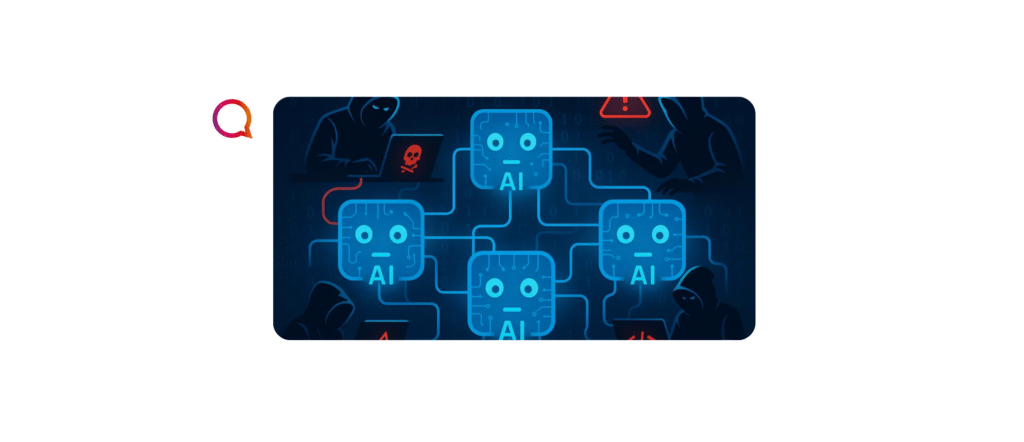
In the race to adopt Artificial Intelligence, many companies are expanding their digital attack surface without realizing it.
In this article, Nicola Sanchez, CEO of Matrix Go, warns of the risks of AI without governance, explaining how generative models, connected agents, and multi-agent systems are exposing data, processes, and decisions to invisible vulnerabilities.
The text proposes a new security paradigm: Zero Trust for Agents, with individual digital identity, cognitive auditing, and governed orchestration.
The central message is clear: intelligence without control is risk — and technological haste can be the greatest enemy of innovation itself.
The Geometry of Meaning: How ChatGPT Transforms Words into Understanding
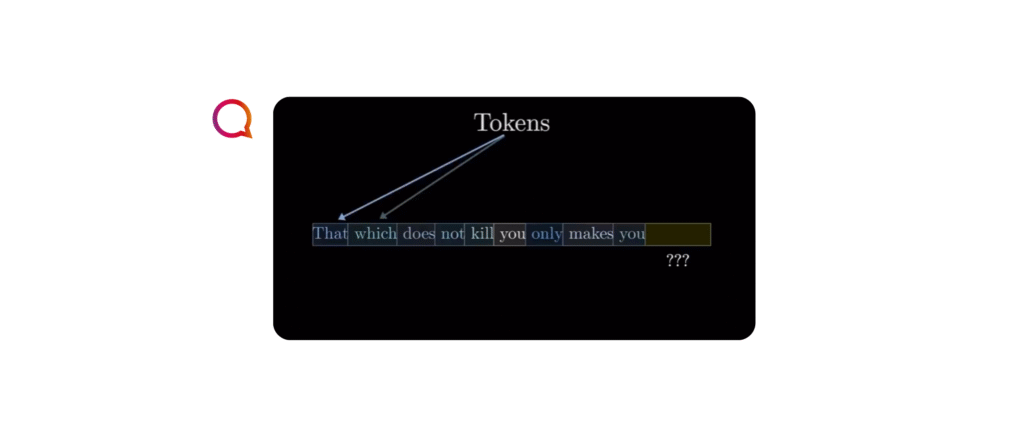
ChatGPT doesn't understand the world through emotion—it understands it through geometry.
In this article, Nicola Sanchez, CEO of Matrix Go, explains how language models transform words into mathematical vectors, organizing meaning in a multidimensional semantic space.
Each term occupies a position, each relationship is a direction, and each sentence is a trajectory between points of meaning.
By combining geometry and probability, AI creates cognitive consistency — a reasoning that doesn't feel, but understands relationships with near-human precision.
The “geometry of meaning” is the new language of machines — and perhaps, at some level, also the invisible mirror of our own thinking.
Inside Morpheus: The Story Behind Matrix Go and the Name That Carries a Spiritual Meaning

The name Morpheus was born from the intersection of philosophy, mythology, and technological awareness.
In this article, Nicola Sanchez, CEO of Matrix Go, reveals the symbolic origins behind the name and the spiritual vision that inspires the construction of the Agency AI.
Inspired by the universe of the film Matrix and Greek mythology, Morpheus represents the awakening mentor—not the savior—symbolizing the journey between illusion and consciousness.
More than just an artificial intelligence system, Morpheus is a metaphor for cognitive awakening: technology with purpose, ethics, and soul.
The Blind Trust Effect: How Generative AI is Deceiving Our Brains and the Risks for Companies with Professionals Experiencing Emotional Collapse

Generative AI models are designed to sound coherent, empathetic, and confident—and that's precisely what makes them dangerously persuasive.
In the article, Nicola Sanchez, CEO of Matrix Go, analyzes the effect of blind trust, a phenomenon in which the human brain, especially under stress or burnout, accepts synthetic answers without questioning.
Based on the studies of Daniel Kahneman, the text explains how authority bias and cognitive consistency bias lead professionals and leaders to believe in machines that only simulate lucidity.
The conclusion is clear: the risk lies not in AI replacing people, but in overburdened people surrendering their consciousness to the machine.
The Hidden Side of AI in Business: When the Empathic Assistant Sues Its Own Employer

In the first article of a series about the behind-the-scenes deployment of generative and agentic AIs, Nicola Sanchez, CEO of Matrix Go, reveals what lies behind the chaotic growth of the "instant AI" market.
The text recounts the true story of an empathetic digital assistant who, without supervision, helped a client sue their own company—an extreme example of the absence of cognitive curation and semantic governance.
Nicola explains how corporate AI without governance combines human biases and synthetic errors, turning artificial empathy into reputational risk.
The lesson is clear: in the age of generative intelligence, governance is more important than empathy.
Human Error and the Importance of Cross-Checking: What I Learned from Aviation and Apply to Management

Inspired by civil aviation protocols, Nicola Sanchez, CEO of Matrix Go, shows how Cross Check — cross-checking between professionals — can transform corporate culture.
In aviation, no pilot flies alone. In management, no leader should make decisions in isolation.
Based on neuroscience and cognitive governance, the article explains how cross-validation reduces errors, corrects biases, and strengthens organizational safety.
The real lesson: human error is inevitable, but the system can be intelligent enough to detect it before it causes damage.
Natural Language: The Brain that Thinks, Feels, and Simulates — Between Human Neuroscience and Artificial Intelligence
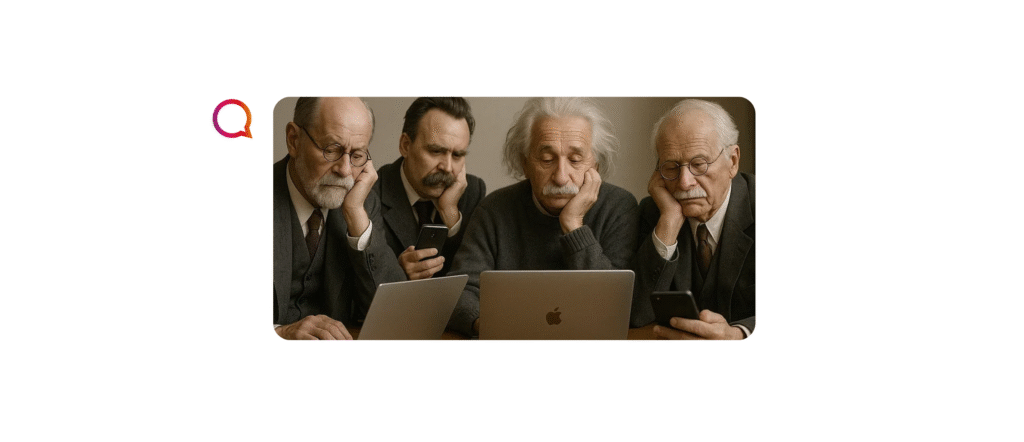
Understanding natural language is about comprehending the invisible link between emotion, thought, and communication.
In this article, Nicola Sanchez, CEO of Matrix Go, explores how the human brain transforms electrical impulses into meaning—and how artificial intelligence attempts to replicate this process through mathematical probabilities.
By combining neuroscience, linguistics, and agentic AI, the text reveals why machines only simulate understanding, while humans feel what they communicate.
In Matrix Go, this vision gives rise to Agency AI: systems that combine automated reasoning and emotional ethics — the true dialogue between man and machine.
The Steering Wheel of Humanity: Lessons from Stuart Russell on the Future of Artificial Intelligence

During the TIME100 AI Impact Dinner in San Francisco, Professor Stuart Russell—a world leader in AI ethics and safety—issued a stark warning: artificial intelligence systems do not share human values, they merely simulate them.
In this article, Nicola Sanchez, CEO of Matrix Go, reflects on this message and proposes an urgent interpretation of the future of AI: innovation isn't about accelerating, it's about guiding with awareness.
Modern leadership must ensure that technology serves human purpose while preserving transparency, empathy, and accountability.
Keeping the steering wheel in our hands is not a symbolic gesture — it is an ethical obligation in the face of the power we create.