

Artificial Intelligence (AI) has been one of the most fascinating and constantly evolving fields in computer science. Over the decades, AI has progressed from a mere idea to become a technological reality that permeates many aspects of our daily lives.Let's explore the history of AI and how it has developed to the present day.
SEE ALSO: “Learn about the different types of Artificial Intelligence”
SEE ALSO: “AI in Chatbots Improves Customer Service”
The beginning of everything.
The first steps towards AI were taken in the mid-20th century, when scientists and researchers began exploring the possibility of creating machines capable of mimicking human intelligence. In 1950, The British mathematician Alan Turing proposed the famous "Turing Test," a test designed to determine whether a machine could exhibit intelligent behavior indistinguishable from that of a human being.This idea was fundamental in driving AI research and development in the following years.
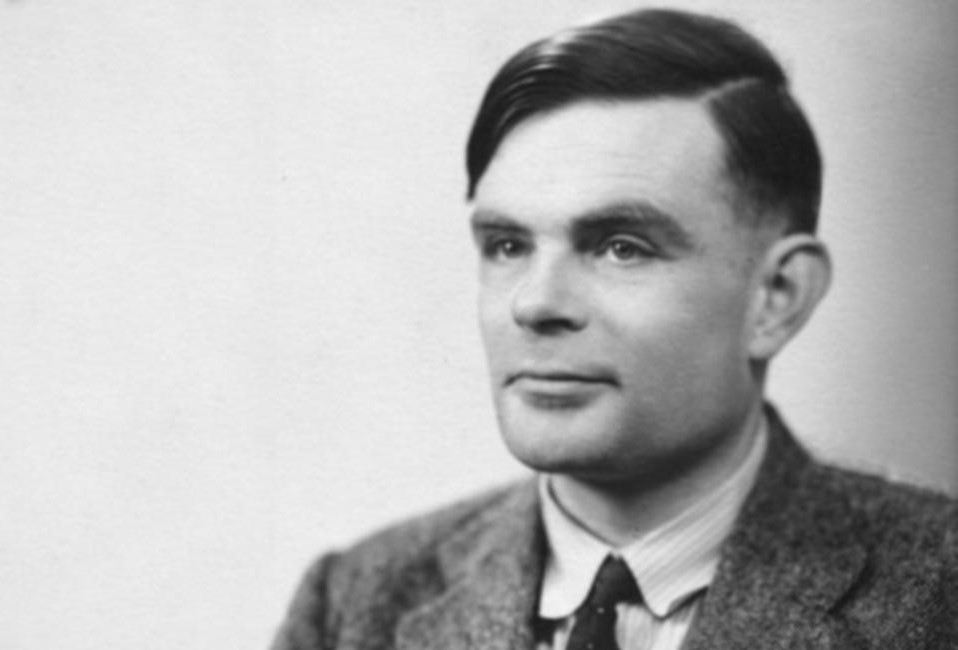
During the 1950s and 1960s, the first AI programs were developed.A significant milestone occurred in 1956 with the Dartmouth Conference, considered the official starting point for the field of AI. At this conference, Pioneers like John McCarthy, Marvin Minsky, and Claude Shannon came together to discuss the challenges and possibilities of AI..
AI Winter
In the following years, the field of AI was marked by initial optimism followed by a period of disillusionment known as “AI Winter“The period refers to two phases in the history of AI in which there was a decline in interest, funding, and progress in research and development in the field.
THE first winter The rise of AI occurred between the late 1960s and early 1980s, efIt was caused by technical problems, unrealistic expectations, academic criticism, and budget cuts..
THE second winter The rise of AI occurred between the mid- and late 1980s, and It was caused by the failure of expert systems, competition from other computational approaches, market saturation, and a lack of innovation.
The AI winter had a negative impact on the reputation and credibility of Artificial Intelligence, generating skepticism, disillusionment, and pessimism about its potential and limitations.However, this period also served as a stimulus to overcome challenges and seek new solutions, methods, and applications for artificial intelligence. Starting in the 1990s... In 1990, AI regained prominence and recognition thanks to advancements in hardware, software, data, neural networks, machine learning, natural language processing, computer vision, and other techniques..
Resurgence of AI
Starting in the decade of In 1990, AI began to re-emerge with renewed force.Advances in computing power, machine learning algorithms, and the availability of large-scale data have enabled significant progress. The development of techniques such as artificial neural networks and genetic algorithms has reinvigorated AI research.
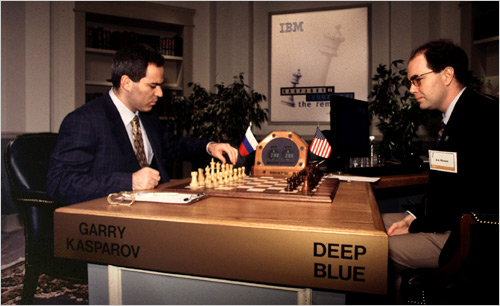
One of the most significant milestones in recent AI history was the victory of IBM's AI program, Deep Blue, over world chess champion Garry Kasparov in 1997.This event drew the world's attention to the potential of AI and its practical applications.
The AI Revolution
Starting from In the 2000s, AI became increasingly present in our daily lives.Virtual assistants, such as Apple's Siri, Amazon's Alexa, and Google Assistant, have become commonplace in smartphones and smart home devices. Furthermore, AI has been applied in a wide range of areas, including medicine, finance, manufacturing, transportation, and much more..

In recent years, an approach called "Deep learning" has driven the advancement of AI. Deep learning uses deep neural networks with many layers to learn and recognize complex patterns in data. This has enabled remarkable advances in areas such as computer vision, natural language processing, and speech recognition.
Present day
Nowadays, the AI is becoming increasingly sophisticated and capable of performing complex tasks.The use of AI in autonomous vehicles, medical diagnostics, machine translation, data analysis, and many other applications is transforming the way we live and work.
As AI continues to develop, important ethical and social issues also arise that need to be addressed. Data privacy, algorithm transparency, and the impact on the job market are just some of the challenges faced by AI.
THE The history of AI is a journey filled with advancements, challenges, and limitless potential.As we continue to explore and refine this area, it is important to consider the balance between the benefits and the ethical concerns that AI brings with it. The future of AI certainly holds even more exciting discoveries and innovations that will shape our world in unimaginable ways.
READ ALSO: “Google Business Messages: More convenience in your business communication!”
READ ALSO: “Smart Chatbot Flow: Transforming the Customer Service Experience”
READ ALSO: “Building a flow for sending a 2nd copy”