In Matrix Go's Morpheus ecosystem, the power lies in choosing the right model—and ensuring it never acts outside of governance.
Introduction
As corporate AI agents become more autonomous and decisive within companies, the silent risk of inadequate orchestration of models.
A single agent using an incorrect or outdated model can generate profound distortions: inconsistent decisions, inaccurate reports, and even regulatory impacts.
In the Matrix Go, we face this issue in a systemic way, with own mechanisms of cognitive governance which ensure that every decision made by an agent is aligned with the context, policy and mission of the organization.
The technical problem: inconsistency between model and context
Modern AI agents rely on precise orchestration between language models, data, and tools. When this orchestration fails, difficult-to-detect anomalies emerge:
- Generic models applied to critical tasks, producing incorrect interpretations;
- Obsolete models still running, not adhering to recent security updates;
- Behavioral drift in non-revalidated adaptive models;
- Silent failures in multi-agent flows, where an incoherent response propagates as truth to the rest of the system.
These flaws are not just technical errors—they are breaches of operational trust.
Matrix Go's answer
At Matrix Go, we understand that the problem is not just which model to use, but how it is used and under what conditions.
Therefore, we implemented a advanced cognitive orchestration layer, integrated into the ecosystem Morpheus, which allows each agent to align with the company's technical, ethical and regulatory requirements — regardless of the underlying model.
This layer ensures:
- Semantic consistency between the task and the executed model;
- Decision traceability and execution records;
- Continuous validation of context and purpose;
- Safe and controlled fallbacks in case of inconsistency.
It's not just about choosing a model — it's about manage the entire cognitive decision cycle responsibly and accurately.
The role of the Orchestrator
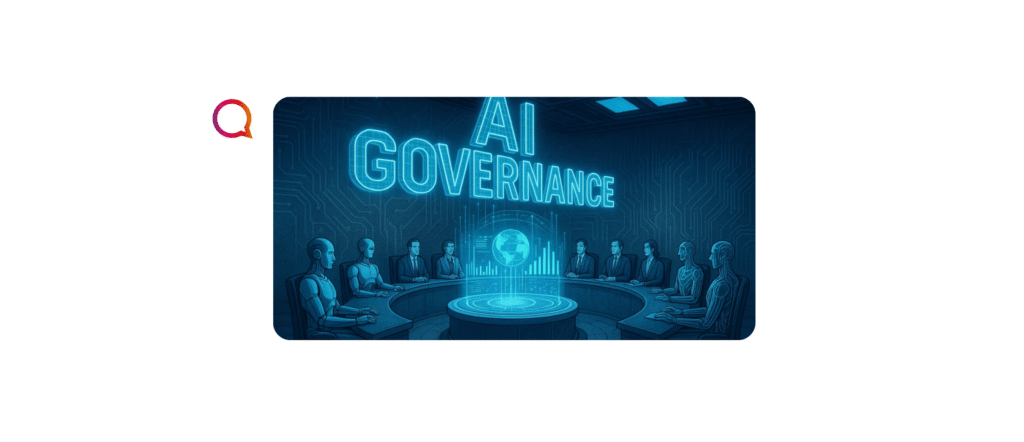
THE Morpheus Orchestrator acts as a central layer of control and governance over the use of AI models within the platform.
It allows different applications and agents to use compatible and aligned models to internal policies, avoiding conflicts between versions, parameters or unexpected behaviors.
Instead of blindly relying on a single model, Matrix Go ensures that each AI instance operates within a technical and ethical security perimeter.
Orchestrator can operate in a automatic or supervised, depending on the level of technical mastery and the criticality of the task. This flexibility ensures that artificial intelligence remains controlled, auditable and reliable.
⚠️ The risk of operating without governance
Companies that deploy AI without orchestration mechanisms face increasing risks:
- Decisions based on inconsistent or outdated models;
- Lack of visibility on which model performed a certain action;
- Unfeasibility of auditing and reproducibility;
- Conflicts between agents with divergent behaviors.
These factors not only compromise results, but also expose organizations to legal and reputational risks. The lack of traceability is, in itself, a violation of compliance.
The MatrixGO difference
THE Matrix Go built the Morpheus on an essential principle:
Autonomy without control is not intelligence — it is operational risk.
Each agent in the ecosystem operates under supervision, curation and defined cognitive security parametersThese pillars ensure predictability, consistency, and trust, even in ecosystems that integrate multiple models and complex tasks.
More than a technical framework, Morpheus is a cognitive governance model: an environment where technology and control coexist to protect the company's purpose and data integrity.
Conclusion
The era of corporate agents will not be won by those with the most computing power, but by those with the most more control over what AI does, when and why.
Matrix Go advocates a clear vision: Enterprise AI needs to be auditable, predictable, and semantically aligned.
The future of intelligence is not in creating increasingly autonomous agents, but in ensuring that they never leave the perimeter of governance.
#MatrixGo #MorpheusAI #GigitalGovernance #Compliance #ACorporateAgents #AITrust #IACorporate #AGlobalAudit #IResponsibleIntelligence
CEO | Leading the AgenticAI Revolution for Enterprise
October 11, 2025