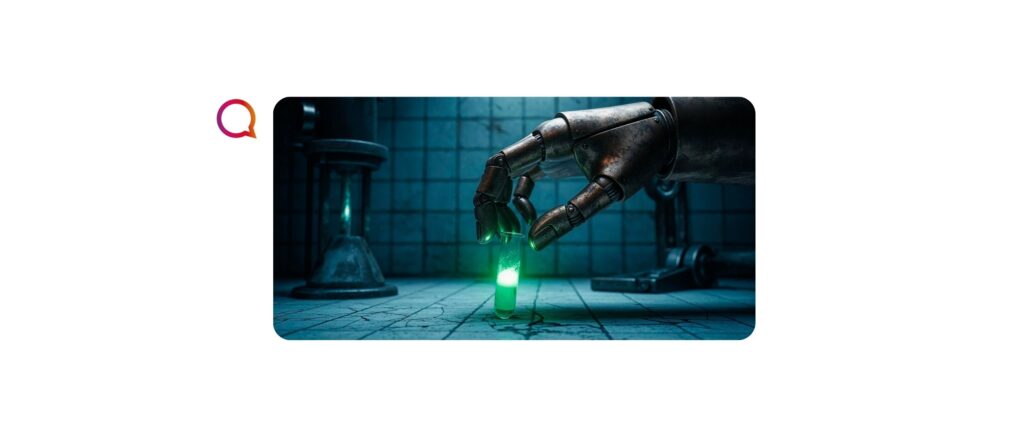

In 2001, Steven Spielberg released "AI Artificial Intelligence." In it, this technology is portrayed as something very futuristic and in a near-apocalyptic scenario where machines replace human beings and are even capable of emulating feelings if programmed to do so.
Currently, in the year the film comes of age, the reality of the fiction is getting closer to reality every day – except for the dystopian world. But, focusing on technological advancements, the improvement of artificial intelligence is impressive, and they are capable of reproducing many predominantly human daily activities. Unlike humans, however, machines are not susceptible to error or the wear and tear that certain professions demand. With this, manual labor is replaced by automated work, with identical quality, but optimized thanks to the systematization of AI.
Take, for example, a call center. Several studies point to how harmful telemarketing work is to mental health. Stress, burnout, and verbal abuse from more agitated customers are just some of the problems that professionals in this field face daily.
All of this leads to a natural decline in human performance. A frustrated professional will either leave the company or you will lose patience with them because of this drop in productivity.
It takes the same amount of time to train a new employee in your primary customer service department as it does to train artificial intelligence, but the AI only needs to be trained once. Instead of training a professional every time, it's much more practical to feed the robot new information because of the continuity and automation of processes. Furthermore, it generates reports automatically, speeding up information analysis, which leads to better company performance.
How can artificial intelligence help my company?
Another important point is the possibility of exploring digital means. An employee won't work 24 hours a day. A robot can provide this service whenever the customer needs it. Sometimes, waiting until the next day to call back won't help, either because the problem has already been solved or because the customer isn't near the device needing maintenance. This can create a feeling of frustration that, if it accumulates, can lead to contract cancellation.
Outsourcing isn't the solution either. Getting rid of a problem doesn't mean it's solved. To be aware of your company's environment and modus operandi, there's nothing better than being there, day-to-day. A lot can be lost in the exchange of information and reports, and this type of process isn't practical.
Economically speaking, investing in problem-solving is far more profitable than spending money trying to mask a problem. A problem that will, in fact, become persistent if simply ignored.