
THE Google Gmail will begin rolling out the Blue Verification Badge, based on a security standard for verifying business emails.This authentication “helps users and email security systems identify and stop spam, and allows senders to leverage the trust in their brand. This will increase trust in email sources and provide readers with an immersive experience, creating a better email ecosystem for everyone.”
The Blue Seal will be awarded to companies and brands that use the Brand Indicators for Message Identification (BIMI) protocol on the platform of Google Workspace. For brands that have already adopted the protocol, the verification symbol will appear automatically.
This new tool will be useful in combating email fraud, such as phishing scams, which are attempts to obtain the recipient's personal and financial information, such as passwords, bank details, and other confidential data. With the blue verified badge, users will be able to immediately identify whether the message received is authentic or a scam attempt.
Google is partnering with other companies to promote the adoption of email authentication based on open standards, such as DMARC (Domain-based Message Authentication, Reporting & Conformance), which helps protect users against email spoofing. This collaboration is important to ensure that more companies adopt this security technology and protect their users against scams and fraud.
Gmail's blue verified badge is yet another security measure adopted by Google to protect its users against online threats. It's important to remember that, even with this new security measure, it's always necessary to be careful when opening suspicious emails and to verify if the sender is truly trustworthy.
SEE ALSO: “Google designs “new search engine” with AI”
SEE ALSO: Google announces Ad Transparency Center
How does the Gmail blue checkmark work?
The Gmail Blue Checkmark is displayed. Next to the sender's name in some emails, it indicates that the message has been verified and authenticated. This means that the sender has confirmed that they own the email address and brand logo, and that the information in the email has been verified to ensure it is not false or fraudulent.
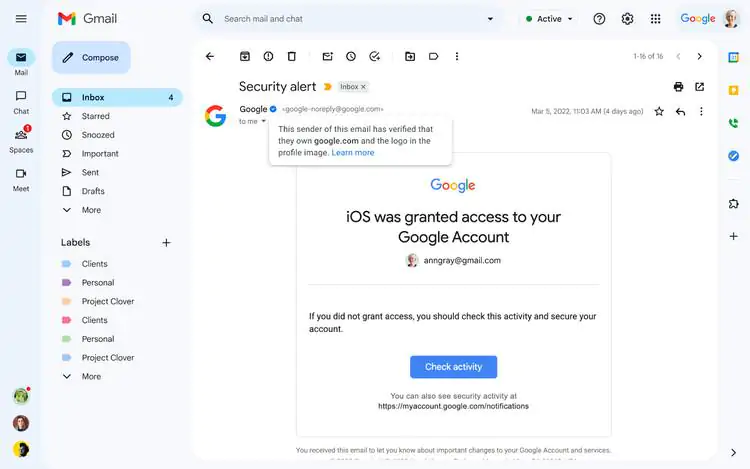
There are several standards that Gmail uses to verify the authenticity of emails, including BIMI, Verified Mark Certificate (VMC), and Domain-based Message Authentication, Reporting & Conformance (DMARC). These standards help ensure that emails are not spam or phishing.
Upon seeing the With the Gmail Blue Checkmark, users can have greater confidence in the legitimacy of emails and reduce the risk of becoming victims of online fraud. It's important to note that not all emails display the blue checkmark; only those that meet the verification criteria of the email service.
READ ALSO: “Meta alert for malware posing as ChatGPT”